
# Custom Handler Schema Reference This guide is for plugin developers who want to add FrontEdit support for a custom Gutenberg block. It documents the public schema contract used by custom handler plugins. Custom handlers are experimental. Build and test them on a staging site before using them on production content. ## Compatibility requirement FrontEdit saves edits by parsing and serializing the native Gutenberg block: ```js wp.blocks.parse( rawBlockContent ); wp.blocks.serialize( blocks ); ``` Before writing a handler for a non-core block, confirm that its provider has already registered the block on the editable frontend page. This registration must include the block's client-side attributes and its matching `save` implementation. ```js wp.blocks.getBlockType( 'your-namespace/your-block' ); ``` The command must return a block definition. If it returns `undefined`, do not add a FrontEdit handler yet. An editor-only provider script is not compatible with FrontEdit and must not be enqueued from a custom handler. Loading an editor-only bundle on the frontend can cause fatal errors, missing browser dependencies, or serialized content that loses provider settings. Core WordPress blocks are registered by FrontEdit. For a custom or third-party block, the block provider is responsible for the compatible frontend registration surface. ## Create a custom handler plugin Copy the `templates/frontedit-live-block-editor-custom-handlers` folder shipped with FrontEdit into `wp-content/plugins`, rename it, and activate it. Its bootstrap registers a PHP handler file through the `mwpsfe_external_handler_files` filter. Handler classes use the `MWPSFE` namespace and extend FrontEdit's public abstract handler classes. Give every PHP class a unique name. A handler ID that matches a built-in ID intentionally replaces that built-in registration. An edit handler normally extends `MWPSFE_Abstract_Text_Edit_Handler` and implements `MWPSFE_Schema_Handler_Interface`. Pair it with a comment handler only when you want the block to support FrontEdit comments. ## Minimal edit handler ```php class My_Plugin_Handler_Notice extends MWPSFE_Abstract_Text_Edit_Handler implements MWPSFE_Schema_Handler_Interface { public function id() { return 'my_plugin_notice'; } public function title() { return 'Edit Notice'; } public function element_type() { return 'Notice'; } public function element_type_code() { return 'my-plugin-notice'; } public function description() { return 'Edit this notice.'; } public function call_to_action() { return 'Click to edit this notice.'; } public function get_supported_blocks() { return array( 'my-plugin/notice' ); } public function get_schema_definition() { return array( 'version' => 1, 'block' => array( 'name' => 'my-plugin/notice', 'type' => 'text', ), 'components' => array( array( 'id' => 'content', 'label' => 'Content', 'type' => 'text', 'selector' => '.my-plugin-notice__content', 'default' => true, 'required' => true, 'placeholder' => 'Add content', 'bindings' => array( array( 'path' => 'content', 'source' => 'html' ), ), 'editor' => array( 'enterMode' => 'never', 'formats' => array( array( 'undo', 'redo' ), array( 'bold', 'italic' ) ), 'operations' => $this->normalize_editor_operations( array( $this->get_editor_text_rewrite_operation( 'content' ), $this->get_editor_inline_format_change_operation( 'content', array( 'bold', 'italic' ) ), ) ), ), ), ), ); } } ``` ## Schema shape Every schema has these required keys: ```php array( 'version' => 1, 'block' => array( 'name' => 'namespace/block', 'type' => 'text' ), 'components' => array(), ) ``` `block.type` is `text` or `media`. A schema may contain both text and file components when a block supports both kinds of editing. ### Optional pristine-default identity declaration Only use this declaration when a block is Gutenberg's native default writing surface and you know its exact untouched serialization: ```php 'identity' => array( 'pristineDefaultInnerHTML' => '

', ), ``` It tells FrontEdit to defer the *first* UUID assignment only while the block has no UUID or shadow UUID, no other block attributes or inner blocks, and its trimmed parsed `innerHTML` exactly matches the declared markup. This is not a general empty-content setting. Once an element has an identifier, FrontEdit will retain it—even if its content is later emptied—so existing history remains attached to that element. ### Components A component describes one editable part of the rendered block. | Key | Required | Description | | --- | --- | --- | | `id` | Yes | Unique component ID within the schema. | | `label` | Yes | Editor-facing label. | | `type` | Yes | `text` or `file`. | | `selector` | Yes | CSS selector relative to the rendered block root. Use `:scope` for the root. | | `default` | No | Selects the component opened by default. | | `required` | No | Blocks saving an empty text component. | | `placeholder` | No | Editor-only placeholder text. | | `bindings` | Text components | Maps the edited DOM value to block attributes. | | `editor` | No | Toolbar, operations, and keyboard behavior. | | `missingUI` | No | Describes an optional text node that may be absent from saved markup. | Text bindings use an attribute `path` and `source`. Use `source: 'html'` for rich text markup and `source: 'text'` for plain text. Attribute paths can be nested, for example `style.typography.textAlign`. ### Optional text components Use `missingUI` when a provider omits an optional text node until it has content. ```php 'missingUI' => array( 'mode' => 'ghost', 'mountSelector' => ':scope', 'placement' => 'append', // append or prepend 'tag' => 'p', 'attributes' => array( 'class' => 'my-plugin-notice__description' ), 'when' => array( 'path' => 'showDescription', 'equals' => true ), 'placementWhen' => array( 'path' => 'descriptionPosition', 'equals' => 'above', 'placement' => 'prepend', ), ), ``` `when` controls whether the ghost appears. `placementWhen` optionally changes its placement when an attribute matches. Both conditions use a scalar `equals` value. ### File components Use `type: 'file'` for a media replacement surface. In addition to the standard component keys, it requires a `target` object: ```php 'target' => array( 'selector' => ':self', // or a selector relative to the component root 'attribute' => 'src', 'mediaType' => 'image', ), ``` `mediaType` is one of `image`, `audio`, `video`, `file`, `image_or_video`, or `icon`. The target attribute is normally `src` or `href`. File and text components may be combined in one schema; FrontEdit switches at component scope but still serializes the complete block. ### Repeated components Use `repeat` for a component that occurs in a table, list, or another repeated structure. Grid mode declares `rowSelector` and `cellSelector`; FrontEdit then resolves `{row}` and `{column}` placeholders in binding paths. ```php 'repeat' => array( 'rowSelector' => 'tbody tr', 'cellSelector' => 'td', ), ``` Nested tree mode uses `mode: 'tree_path'`, `itemSelector`, and an optional `pathKey` (default `path`). Use it for one block that owns nested repeated text surfaces, such as a list. ### Binding sources Bindings require `path` and `source`. A path uses dot notation and may include repeat placeholders. Supported sources are: - `html` - rich inner HTML, including supported inline formatting. - `plaintext` - trimmed text without markup. - `textAlignment` - the active text alignment value. - `url` and `id` - media URL or attachment ID. - `media_type` - derives `image` or `video` from a pending media change. - `list_block` - rebuilds a complete nested list block from the live DOM. Media `url` bindings may set `resolved: true` to use WordPress-resolved attachment data. Set `value` to `width` or `height` when that resolved field is needed instead of the URL. ### Editor formats and operations `editor.formats` controls the toolbar. Supported tokens include `undo`, `redo`, `align`, `textAlignment`, `headingLevels`, `bold`, `italic`, `strikethrough`, `link`, `buttonLink`, `orderedList`, `unorderedList`, `indent`, and `outdent`. Nest tokens in an array to group them. `enterMode` may be `auto`, `always`, `never`, or `linebreak`. `linkUIMode: 'manual'` suppresses automatic link UI while a user edits an existing anchor; omit it for the default `auto` behavior. `tabMode` can use `none`, `indent`, `outdent`, `nextComponent`, or `previousComponent` for its `tab` and `shiftTab` values. `editor.options.preserveNewlines` converts `
` elements to literal newlines before saving. `newlinesToBR` does the opposite. Use only when the native block uses that representation. Use the protected helper methods on the abstract edit handler to declare the matching operations. Common helpers are: - `get_editor_text_rewrite_operation( $component_id )` - `get_editor_inline_format_change_operation( $component_id, $formats )` - `get_editor_inline_attribute_change_operation( $component_id, 'link', $capabilities )` - `get_editor_block_attribute_change_operation( $operation_id, $component_id, $capability )` Pass the completed array through `normalize_editor_operations()`. ### Attribute capabilities Declare block attributes used by toolbar operations under `editor.attributeCapabilities`. ```php 'headingLevels' => array( 'attribute' => 'level', 'values' => array( 1, 2, 3, 4, 5, 6 ), 'unsetValue' => 2, ), 'textAlignment' => array( 'attribute' => 'style.typography.textAlign', 'values' => array( 'left', 'center', 'right', 'justify' ), 'unsetValue' => 'left', ), ``` `headingLevels` is the canonical token for a heading-level or element-tag menu. For blocks whose values are tags, use values such as `h1`, `p`, and `div`, plus `tagChange: true`. The corresponding block-attribute operation will update both the declared attribute and the editable element tag. For a text-alignment capability, `preview: 'inline_style'` applies the preview through `style.textAlign` on the resolved format target. Use it only when the block's native frontend styling does not use WordPress `has-text-align-*` classes. `editor.formatTargets` can direct a toolbar operation to a selector or an object with `scope` (`component`, `block`, or `column`), `selector`, and an optional column `contextKey`. For example, use `array( 'align' => 'block' )` when block alignment belongs on the wrapper rather than the editable text node. ### Inline formatting For standard text formatting, obtain the supported format declarations with: ```php $inline_format_capabilities = $this->get_inline_format_capabilities( array( 'bold', 'italic', 'strikethrough', 'link' ) ); ``` Attach that value to `editor.inlineFormatCapabilities` and create matching inline-format and link operations. ## Validation checklist Before publishing a handler, verify all of the following on the frontend: 1. `wp.blocks.getBlockType( blockName )` returns the provider block definition. 2. Parsing then serializing an unchanged saved block preserves the block and its unrelated attributes. 3. Each text, media, attribute, and inline-format operation saves correctly. 4. Optional components materialize only under their declared conditions. 5. A provider update has not changed the saved markup, attributes, or `save` behavior your handler relies on. If any compatibility check fails, disable or defer the handler rather than editing rendered HTML directly. FrontEdit custom handlers always use Gutenberg's native block serialization path.

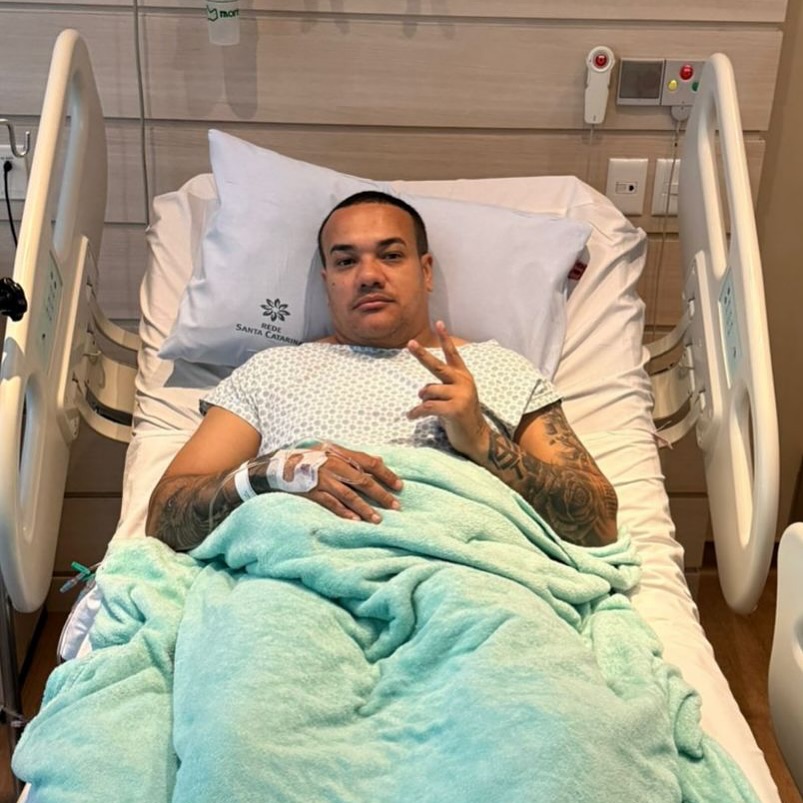
Vitinho, ex-vocalista do Disfarce, anuncia pausa na carreira após cirurgia nas cordas vocais

O cantor Vitinho, ex-vocalista do grupo de pagode Disfarce, anunciou nesta segunda-feira (27) que fará uma pausa temporária na carreira para se recuperar de um procedimento cirúrgico nas cordas vocais. Aos 33 anos, o artista revelou nas redes sociais que foi diagnosticado com dois pólipos e precisou realizar uma cirurgia para a retirada das lesões.

Em uma publicação no Instagram, Vitinho explicou que vinha enfrentando rouquidão e dificuldade para cantar há alguns meses, o que o levou a buscar tratamento especializado.

“Passei por um procedimento cirúrgico para retirada de dois pólipos grandes nas minhas cordas vocais. Isso vinha atrapalhando meu desempenho vocal há alguns meses e causando muita rouquidão, por conta da força que eu precisava fazer pra cantar”, escreveu o cantor.

O artista afirmou que decidiu adiar o tratamento para cumprir compromissos da agenda, mas que agora o foco é na recuperação total.

“Eu sempre estudei muito pra tentar ser um excelente cantor, e isso estava me incomodando bastante, porque levo a música a sério e gosto de entregar o melhor pra quem me ouve. Esperei um pouco pra resolver, porque ainda tinha compromissos na agenda, mas agora é hora de cuidar disso pra voltar 100%”, completou.

Segundo a assessoria do músico, a cirurgia ocorreu sem complicações, e o período de recuperação deve durar cerca de um mês. Vitinho está sendo acompanhado pela otorrinolaringologista Sabryna Farneze e pela fonoaudióloga Dani Lima, que o auxiliam no processo de reabilitação vocal.

O que são pólipos nas cordas vocais

Os pólipos vocais são lesões benignas que se formam nas pregas vocais, podendo causar rouquidão, afonia e esforço excessivo para falar ou cantar. Normalmente, surgem devido ao uso intenso ou incorreto da voz, como falar alto, gritar ou cantar por longos períodos sem descanso.

O tratamento pode envolver cirurgia, sessões de fonoaudiologia e mudanças no estilo de vida — como evitar gritar, hidratar-se adequadamente e suspender o tabagismo. O diagnóstico é feito por meio de exames realizados por um médico otorrinolaringologista, e, em alguns casos, pode ser necessária uma biópsia para descartar outras condições.

Quem é Vitinho

Natural do Rio de Janeiro, Victor Sales, conhecido com Vitinho, tem 33 anos, é cantor e compositor de pagode romântico. Ele iniciou a carreira ainda jovem e ganhou projeção nacional ao integrar o grupo Disfarce, onde se destacou por interpretações de sucessos como “22 Minutos”, “Sintomas de Amor” e “Solução”. Após sua saída da banda, seguiu carreira solo, consolidando-se como um dos principais nomes da nova geração do pagode. Nas plataformas digitais, o cantor acumula milhões de reproduções e engajamento nas redes sociais, sendo reconhecido por manter proximidade com o público e por sempre valorizar a autenticidade e emoção em suas músicas.

Retorno aos palcos

A expectativa é que Vitinho retorne aos palcos em cerca de um mês, após liberação médica. O cantor, que construiu uma carreira sólida no pagode com letras românticas e interpretações marcantes, destacou o desejo de voltar ainda mais preparado.

“Agora é hora de cuidar disso pra voltar 100%”, afirmou o músico, agradecendo o apoio dos fãs e da equipe médica durante o período de recuperação.

Grupo Disfarce inicia nova fase

Enquanto Vitinho se recupera, o grupo Disfarce, conhecido por sucessos como “22 Minutos” e “Sintomas de Amor”, anunciou uma nova formação. A banda agora conta com Sanclair Bessa (voz), Labamba (cavaco), Arthur Teixeira (violão), Raphael (percussão) e Lumi (percussão).

Em nota publicada nas redes sociais, os integrantes afirmaram que este é o início de uma nova era para o grupo.

“Um novo momento se inicia na história desse grupo tão amado por todo o país. Podemos esperar muitas novidades e um astral elevadíssimo”, declarou Sanclair, ex-vocalista do grupo Inverso.

Além de músicas inéditas, o Disfarce promete regravar clássicos que marcaram época, como “Pega Pega”, “Solução”, “Suposto Namorado” e “Matéria Preferida”.

Deixe um comentário

import React from 'react' import importPhoto from '../../api/importPhoto' import Button from './Button' import ButtonActionProvider from '../Actions/ButtonActionProvider' import ExternalLinkButton from './ExternalLinkButton' import useGlobalConfig from '../Contexts/useGlobalConfig' import { getImportedPhotoUrl } from '../../utils/linkGenerator' /** * Helper to render a series of buttons to install a template kit. * * @param photoId * @param photoTitle * @param showLabel * @param customActionHook * @param completeCallback * @param errorCallback * @returns {*} * @constructor */ const ImportPhotoButton = ({ photoId, photoTitle, showLabel = false, customActionHook = null, completeCallback = null, errorCallback = null }) => { const { getDownloadedItemId, addDownloadedItem } = useGlobalConfig() const importedPhotoId = getDownloadedItemId(photoId) let isAlreadyCompleted = !!importedPhotoId if (typeof window.envatoElements.photoImportCompleteCallback !== 'undefined') { // This variable is set in "main.jsx" and lets us reach into WordPress core code. // If this is set then we treat the download action as incomplete, this means we fire // importPhoto() again when in Deep Photo Integration mode. This allows our API to // return the JSON required for deep integration to work correctly. // The photo isn't imported twice due to a check in PHP so all good. isAlreadyCompleted = false } return ( } LoadingButton={