

# Custom Handler Schema Reference This guide is for plugin developers who want to add FrontEdit support for a custom Gutenberg block. It documents the public schema contract used by custom handler plugins. Custom handlers are experimental. Build and test them on a staging site before using them on production content. ## Compatibility requirement FrontEdit saves edits by parsing and serializing the native Gutenberg block: ```js wp.blocks.parse( rawBlockContent ); wp.blocks.serialize( blocks ); ``` Before writing a handler for a non-core block, confirm that its provider has already registered the block on the editable frontend page. This registration must include the block's client-side attributes and its matching `save` implementation. ```js wp.blocks.getBlockType( 'your-namespace/your-block' ); ``` The command must return a block definition. If it returns `undefined`, do not add a FrontEdit handler yet. An editor-only provider script is not compatible with FrontEdit and must not be enqueued from a custom handler. Loading an editor-only bundle on the frontend can cause fatal errors, missing browser dependencies, or serialized content that loses provider settings. Core WordPress blocks are registered by FrontEdit. For a custom or third-party block, the block provider is responsible for the compatible frontend registration surface. ## Create a custom handler plugin Copy the `templates/frontedit-live-block-editor-custom-handlers` folder shipped with FrontEdit into `wp-content/plugins`, rename it, and activate it. Its bootstrap registers a PHP handler file through the `mwpsfe_external_handler_files` filter. Handler classes use the `MWPSFE` namespace and extend FrontEdit's public abstract handler classes. Give every PHP class a unique name. A handler ID that matches a built-in ID intentionally replaces that built-in registration. An edit handler normally extends `MWPSFE_Abstract_Text_Edit_Handler` and implements `MWPSFE_Schema_Handler_Interface`. Pair it with a comment handler only when you want the block to support FrontEdit comments. ## Minimal edit handler ```php class My_Plugin_Handler_Notice extends MWPSFE_Abstract_Text_Edit_Handler implements MWPSFE_Schema_Handler_Interface { public function id() { return 'my_plugin_notice'; } public function title() { return 'Edit Notice'; } public function element_type() { return 'Notice'; } public function element_type_code() { return 'my-plugin-notice'; } public function description() { return 'Edit this notice.'; } public function call_to_action() { return 'Click to edit this notice.'; } public function get_supported_blocks() { return array( 'my-plugin/notice' ); } public function get_schema_definition() { return array( 'version' => 1, 'block' => array( 'name' => 'my-plugin/notice', 'type' => 'text', ), 'components' => array( array( 'id' => 'content', 'label' => 'Content', 'type' => 'text', 'selector' => '.my-plugin-notice__content', 'default' => true, 'required' => true, 'placeholder' => 'Add content', 'bindings' => array( array( 'path' => 'content', 'source' => 'html' ), ), 'editor' => array( 'enterMode' => 'never', 'formats' => array( array( 'undo', 'redo' ), array( 'bold', 'italic' ) ), 'operations' => $this->normalize_editor_operations( array( $this->get_editor_text_rewrite_operation( 'content' ), $this->get_editor_inline_format_change_operation( 'content', array( 'bold', 'italic' ) ), ) ), ), ), ), ); } } ``` ## Schema shape Every schema has these required keys: ```php array( 'version' => 1, 'block' => array( 'name' => 'namespace/block', 'type' => 'text' ), 'components' => array(), ) ``` `block.type` is `text` or `media`. A schema may contain both text and file components when a block supports both kinds of editing. ### Optional pristine-default identity declaration Only use this declaration when a block is Gutenberg's native default writing surface and you know its exact untouched serialization: ```php 'identity' => array( 'pristineDefaultInnerHTML' => '

', ), ``` It tells FrontEdit to defer the *first* UUID assignment only while the block has no UUID or shadow UUID, no other block attributes or inner blocks, and its trimmed parsed `innerHTML` exactly matches the declared markup. This is not a general empty-content setting. Once an element has an identifier, FrontEdit will retain it—even if its content is later emptied—so existing history remains attached to that element. ### Components A component describes one editable part of the rendered block. | Key | Required | Description | | --- | --- | --- | | `id` | Yes | Unique component ID within the schema. | | `label` | Yes | Editor-facing label. | | `type` | Yes | `text` or `file`. | | `selector` | Yes | CSS selector relative to the rendered block root. Use `:scope` for the root. | | `default` | No | Selects the component opened by default. | | `required` | No | Blocks saving an empty text component. | | `placeholder` | No | Editor-only placeholder text. | | `bindings` | Text components | Maps the edited DOM value to block attributes. | | `editor` | No | Toolbar, operations, and keyboard behavior. | | `missingUI` | No | Describes an optional text node that may be absent from saved markup. | Text bindings use an attribute `path` and `source`. Use `source: 'html'` for rich text markup and `source: 'text'` for plain text. Attribute paths can be nested, for example `style.typography.textAlign`. ### Optional text components Use `missingUI` when a provider omits an optional text node until it has content. ```php 'missingUI' => array( 'mode' => 'ghost', 'mountSelector' => ':scope', 'placement' => 'append', // append or prepend 'tag' => 'p', 'attributes' => array( 'class' => 'my-plugin-notice__description' ), 'when' => array( 'path' => 'showDescription', 'equals' => true ), 'placementWhen' => array( 'path' => 'descriptionPosition', 'equals' => 'above', 'placement' => 'prepend', ), ), ``` `when` controls whether the ghost appears. `placementWhen` optionally changes its placement when an attribute matches. Both conditions use a scalar `equals` value. ### File components Use `type: 'file'` for a media replacement surface. In addition to the standard component keys, it requires a `target` object: ```php 'target' => array( 'selector' => ':self', // or a selector relative to the component root 'attribute' => 'src', 'mediaType' => 'image', ), ``` `mediaType` is one of `image`, `audio`, `video`, `file`, `image_or_video`, or `icon`. The target attribute is normally `src` or `href`. File and text components may be combined in one schema; FrontEdit switches at component scope but still serializes the complete block. ### Repeated components Use `repeat` for a component that occurs in a table, list, or another repeated structure. Grid mode declares `rowSelector` and `cellSelector`; FrontEdit then resolves `{row}` and `{column}` placeholders in binding paths. ```php 'repeat' => array( 'rowSelector' => 'tbody tr', 'cellSelector' => 'td', ), ``` Nested tree mode uses `mode: 'tree_path'`, `itemSelector`, and an optional `pathKey` (default `path`). Use it for one block that owns nested repeated text surfaces, such as a list. ### Binding sources Bindings require `path` and `source`. A path uses dot notation and may include repeat placeholders. Supported sources are: - `html` - rich inner HTML, including supported inline formatting. - `plaintext` - trimmed text without markup. - `textAlignment` - the active text alignment value. - `url` and `id` - media URL or attachment ID. - `media_type` - derives `image` or `video` from a pending media change. - `list_block` - rebuilds a complete nested list block from the live DOM. Media `url` bindings may set `resolved: true` to use WordPress-resolved attachment data. Set `value` to `width` or `height` when that resolved field is needed instead of the URL. ### Editor formats and operations `editor.formats` controls the toolbar. Supported tokens include `undo`, `redo`, `align`, `textAlignment`, `headingLevels`, `bold`, `italic`, `strikethrough`, `link`, `buttonLink`, `orderedList`, `unorderedList`, `indent`, and `outdent`. Nest tokens in an array to group them. `enterMode` may be `auto`, `always`, `never`, or `linebreak`. `linkUIMode: 'manual'` suppresses automatic link UI while a user edits an existing anchor; omit it for the default `auto` behavior. `tabMode` can use `none`, `indent`, `outdent`, `nextComponent`, or `previousComponent` for its `tab` and `shiftTab` values. `editor.options.preserveNewlines` converts `
` elements to literal newlines before saving. `newlinesToBR` does the opposite. Use only when the native block uses that representation. Use the protected helper methods on the abstract edit handler to declare the matching operations. Common helpers are: - `get_editor_text_rewrite_operation( $component_id )` - `get_editor_inline_format_change_operation( $component_id, $formats )` - `get_editor_inline_attribute_change_operation( $component_id, 'link', $capabilities )` - `get_editor_block_attribute_change_operation( $operation_id, $component_id, $capability )` Pass the completed array through `normalize_editor_operations()`. ### Attribute capabilities Declare block attributes used by toolbar operations under `editor.attributeCapabilities`. ```php 'headingLevels' => array( 'attribute' => 'level', 'values' => array( 1, 2, 3, 4, 5, 6 ), 'unsetValue' => 2, ), 'textAlignment' => array( 'attribute' => 'style.typography.textAlign', 'values' => array( 'left', 'center', 'right', 'justify' ), 'unsetValue' => 'left', ), ``` `headingLevels` is the canonical token for a heading-level or element-tag menu. For blocks whose values are tags, use values such as `h1`, `p`, and `div`, plus `tagChange: true`. The corresponding block-attribute operation will update both the declared attribute and the editable element tag. For a text-alignment capability, `preview: 'inline_style'` applies the preview through `style.textAlign` on the resolved format target. Use it only when the block's native frontend styling does not use WordPress `has-text-align-*` classes. `editor.formatTargets` can direct a toolbar operation to a selector or an object with `scope` (`component`, `block`, or `column`), `selector`, and an optional column `contextKey`. For example, use `array( 'align' => 'block' )` when block alignment belongs on the wrapper rather than the editable text node. ### Inline formatting For standard text formatting, obtain the supported format declarations with: ```php $inline_format_capabilities = $this->get_inline_format_capabilities( array( 'bold', 'italic', 'strikethrough', 'link' ) ); ``` Attach that value to `editor.inlineFormatCapabilities` and create matching inline-format and link operations. ## Validation checklist Before publishing a handler, verify all of the following on the frontend: 1. `wp.blocks.getBlockType( blockName )` returns the provider block definition. 2. Parsing then serializing an unchanged saved block preserves the block and its unrelated attributes. 3. Each text, media, attribute, and inline-format operation saves correctly. 4. Optional components materialize only under their declared conditions. 5. A provider update has not changed the saved markup, attributes, or `save` behavior your handler relies on. If any compatibility check fails, disable or defer the handler rather than editing rendered HTML directly. FrontEdit custom handlers always use Gutenberg's native block serialization path.

Jonathan Couto fala sobre relação com Sarah Poncio e esclarece viagem a Paris

Jonathan Couto, cantor e influenciador digital, contou no ‘Now Podcast’ como está sua relação com a ex-esposa Sarah Poncio, após especulações de uma possível reconciliação quando os dois viajaram juntos para Paris. Eles são pais de João, de 8 anos, e José, de 6. O artista esclareceu como funciona a convivência com a deputada estadual do Rio de Janeiro e reforçou que a harmonia entre eles é mantida em respeito aos filhos e à história que construíram.
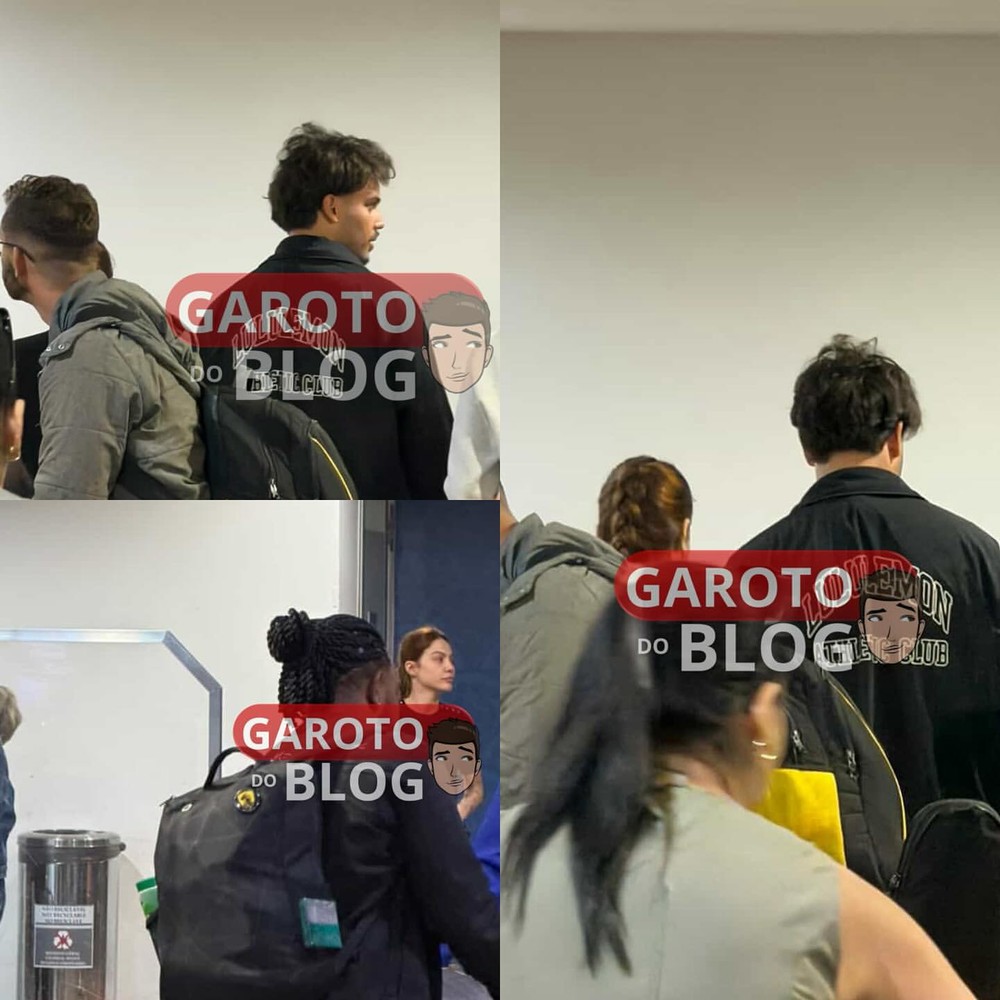
jhonatan e sarah
Sarah Poncio e Jonathan Couto viajando para Paris — Foto: Reprodução/Instagram/Daily do Garotinho

“Cara, eu e a Sarah, quando a gente se separou, acho que eu tinha 26 anos ou 25 anos. Aí a gente terminou; ela quis terminar na época e tal, e eu não queria, porque eu já tava numa fase, tipo assim: eu tinha feito merd* e tal.

Depois eu peguei e foquei na igreja, já estava como missionário, pregando, família… aquilo não fazia mais parte da minha vida, do que tinha acontecido. Só que depois ela quis separar. E aí eu entendo hoje, pô. Talvez eu não seria quem eu sou hoje se eu tivesse casado ainda. Se ela não tivesse passado pelas experiências dela”, declarou.

“E se eu não tivesse conhecido pessoas que foram importantes pra minha vida, pra trazer de volta, de repente, o meu valor, quem o Jonathan era, que eu tinha perdido em algum momento da minha vida. Porque o Jonathan nunca teria feito o que eu fiz, irmão. Ponto. Lealdade, pra mim, não se negocia. Entendeu?

Eu fui sobrinho de bicheiro. Então a gente sabe que lealdade se paga com a vida. Então eu sempre fui muito parar de errar. O Saulo é meu irmão. E a Sarah, a gente só teve um probleminha quando separou ali, porque era uma coisa, tipo assim, de eu gostar dela, querer viver a vida dela, não aceitar aquela coisa de homem, aquele ego, que hoje, com 31 anos, irmão, não existe mais”, continuou.

“Ah, já viveu? Vivi! Isso é com qualquer mulher. É igual você conhecer a pessoa hoje: ‘Ah, não, já namorei’. ‘Ah, então não vou ficar com você porque já namorou’. Hoje estou com maturidade. Aí eu fui aprendendo muito, porque meus pais sempre foram muito amigos. Então, meu pai casado, minha mãe casada com outra pessoa, eles conviviam na mesma casa, andavam juntos, iam para o mesmo lugar. Aniversário da minha avó, que é a mãe do meu pai: minha mãe ia com o marido atual dela no aniversário da minha avó. Então eu sempre tive essa relação. E eu sempre tentei lidar ali com a Sarah e com a família”

“Com a família eu nunca deixei de lidar; eu continuava como genro ali, independente de ela ter namorado outras pessoas e tal. Mas com ela, a gente foi se adaptando. E aí, com o tempo, a gente começou a se entender: cara, qual é o nosso papel? Pai e mãe. E a gente passou a ser tipo amigo. E aí, só aquele lado de marido e mulher, esquecemos isso e fomos vivendo.

familia
Jonathan Couto e Sarah Poncio — Foto: Reprodução/Instagram

Hoje a gente está super bem, a gente se fala, se trata muito bem. A gente foi até para Paris agora, tipo assim, uma viagem de amigo mesmo, zero casal. E, cara, hoje a gente está aí. Mas vou te falar: eu… ela, talvez, se me ligar meia-noite, em qualquer momento da minha vida, mesmo que eu esteja namorando, eu vou falar assim: caramba, meu filho está me ligando, preciso socorrer”, afirmou.

“Então ela pode estar namorando, que eu vou olhar pra ela e vou sentir que tenho que proteger, proteger ela, porque a mulher é a mãe dos meus filhos, irmão. Então, assim, é difícil explicar. E ali é família, irmão. Uma vez que tu entra ali — e eu entrei — para tu sair, irmão, é difícil. Eu entrei como uma criança e me tornei um homem ali dentro. Eu entrei com 20 anos e já tenho 31″, relatou o cantor.

“Eu ficava com o Márcio e a Simone todos os dias. Eu dormia todos os dias na mesma casa durante 6 anos. Irmão, é muito tempo de convivência. Acho que talvez nem o meu pai e a minha mãe viveram isso, porque eu tinha que ir para a escola, e não… ali era fazendo tudo: viagem, férias, viajava. Então a nossa relação é de família, e a gente soube separar muito isso,” finalizou.

Captura de tela 2025 12 05 104314
Jonathan Couto, Sarah Poncio e filhos (José e João) — Foto: Reprodução/Instagram

Deixe um comentário

import React from 'react' import importPhoto from '../../api/importPhoto' import Button from './Button' import ButtonActionProvider from '../Actions/ButtonActionProvider' import ExternalLinkButton from './ExternalLinkButton' import useGlobalConfig from '../Contexts/useGlobalConfig' import { getImportedPhotoUrl } from '../../utils/linkGenerator' /** * Helper to render a series of buttons to install a template kit. * * @param photoId * @param photoTitle * @param showLabel * @param customActionHook * @param completeCallback * @param errorCallback * @returns {*} * @constructor */ const ImportPhotoButton = ({ photoId, photoTitle, showLabel = false, customActionHook = null, completeCallback = null, errorCallback = null }) => { const { getDownloadedItemId, addDownloadedItem } = useGlobalConfig() const importedPhotoId = getDownloadedItemId(photoId) let isAlreadyCompleted = !!importedPhotoId if (typeof window.envatoElements.photoImportCompleteCallback !== 'undefined') { // This variable is set in "main.jsx" and lets us reach into WordPress core code. // If this is set then we treat the download action as incomplete, this means we fire // importPhoto() again when in Deep Photo Integration mode. This allows our API to // return the JSON required for deep integration to work correctly. // The photo isn't imported twice due to a check in PHP so all good. isAlreadyCompleted = false } return ( } LoadingButton={